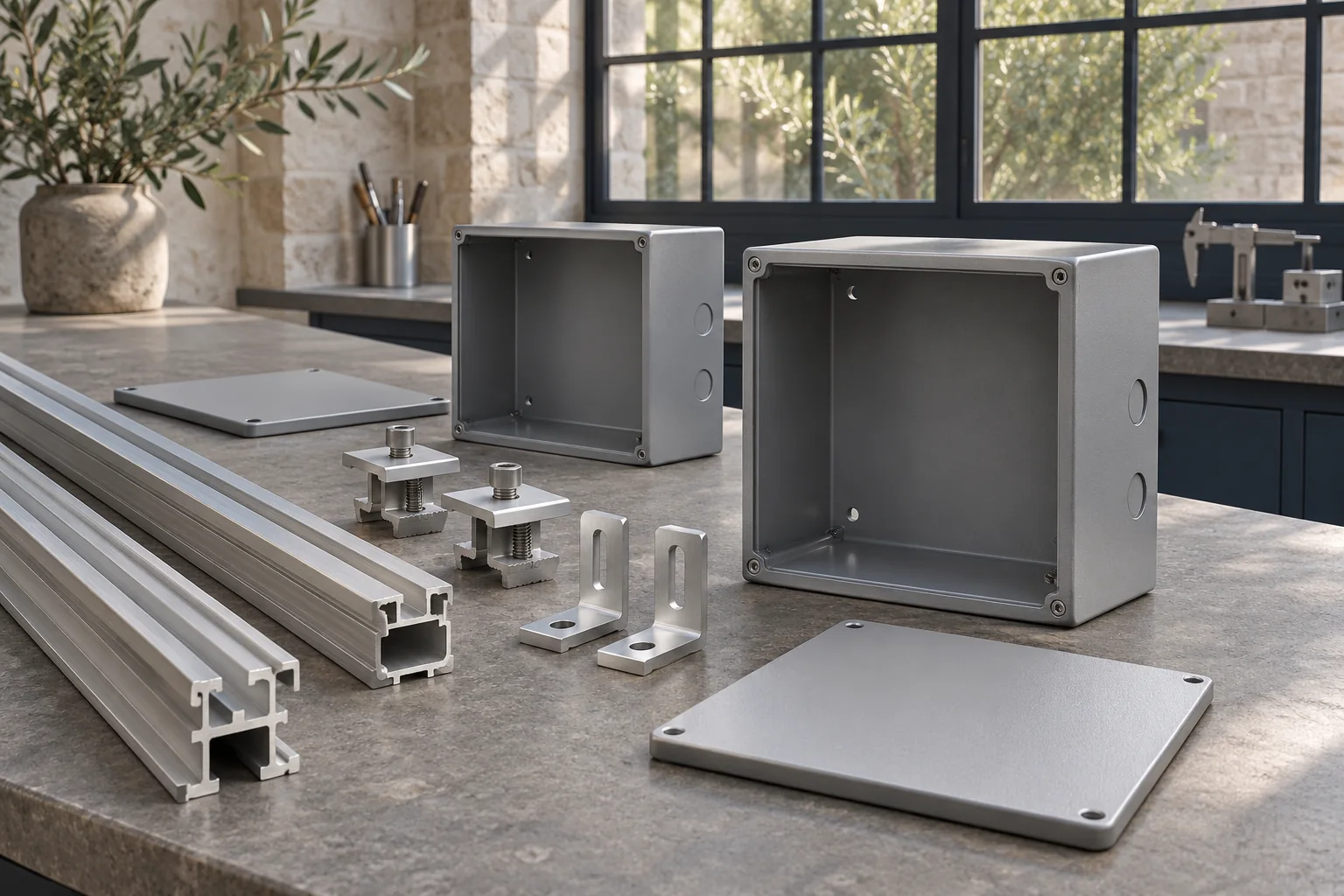
Will the finished enclosure protect the equipment in the real installation, after every cut-out and component is fitted?
Separate ingress protection from corrosion, heat and condensation requirements.
Specify the finished configuration, including glands, vents, seals, mounting and service access.
Use domestic energy scale to understand the ecosystem, not to infer enclosure demand or export suitability.
Market evidence
Reporting periods and statistical scope are shown for each figure.
- 2025 · ChinaNew photovoltaic generating capacity connected
317GW
A substantial domestic deployment base supports an extensive electrical ecosystem.
PV deployment, not enclosure sales, manufacturing capacity or export demand.
Source 1- 2025 · ChinaNew distributed photovoltaic capacity
153GW
Distributed installations highlight why varied sites and exposure conditions deserve separate engineering definitions.
Subset of the 317 GW PV additions, not an additional amount to add to it.
Source 1- April 2026 report · Liushi electrical ecosystemIndustry-chain enterprises described in the local cluster account
17,000upstream and downstream enterprises
The depth of supporting businesses makes responsibility for materials and outsourced processes especially important.
Government-reported ecosystem count, not a verified shortlist or count of export-qualified factories.
Source 2
A large domestic market creates depth, not a standard solution
China added 317 GW of photovoltaic capacity in 2025, including 153 GW of distributed PV, according to the National Energy Administration. Those figures describe installations, not an addressable market for imported enclosures. They help explain why electrical-equipment supply chains serve a wide range of applications and environments. 1
Liushi’s April 2026 government account describes an ecosystem of 17,000 upstream and downstream enterprises. The region offers industrial depth; the application still determines whether an available cabinet is appropriate for a coastal European site, a cold equipment room or a compact power-electronics assembly. 2
MANUFACTURING GEOGRAPHY
IP is one boundary of the specification
An ingress-protection statement addresses defined ingress conditions. Rittal’s technical guidance cautions that outdoor suitability also requires consideration of weather, corrosion, condensation and solar heat. A high ingress rating is therefore an incomplete purchasing specification for an outdoor electrical assembly. 4
Start with the installation: indoor or outdoor, sheltered or exposed, expected ambient conditions, salt or chemical exposure, cleaning method and maintenance access. Then define which parts of the enclosure system must address each condition. A painted steel cabinet, stainless enclosure and polymer box should not be compared as interchangeable rectangles. Their suitability depends on the particular environment, mechanical requirements and assembly design. Qualified engineers should select materials and verification methods; a general material name does not settle the decision.
Sealing and cooling can pull the design in different directions
Power electronics generate heat, while an outdoor enclosure also receives environmental heat. Tighter sealing can complicate the cooling strategy. Opening a ventilation path changes the environmental boundary. The useful specification therefore identifies heat dissipation, internal layout, external conditions and the permitted thermal solution together.
Condensation is a separate mechanism. Rittal explains that moisture can condense when air contacts surfaces below its dew point and discusses location-dependent heating or cooling approaches. A dry factory inspection cannot establish behaviour through an installation’s temperature and humidity changes. 5
The commercial implication is that cooling, heaters, drainage or pressure-management components—where the engineer selects them—belong in the system cost. Reducing the enclosure purchase price while excluding those elements can make the comparison misleading. Equally, an elaborate climate-control package should earn its cost against the actual heat and moisture requirements rather than being specified by habit.
The delivered cabinet is the tested object that matters
Cable entries, door hardware, gaskets, vents and mounting details create interfaces in the enclosure’s protective boundary. Ask the supplier to identify the exact configuration described by each test report, then have a qualified reviewer determine whether the proposed assembly is covered. A photograph of a similar empty box does not answer that question.
The same logic applies to mechanical integrity and corrosion evidence. Material grades, coating systems, edge treatment and contact between materials should be specified at the points that matter. A test duration should not be translated into years of outdoor service without a defensible engineering basis. Installation loads and mounting-component suitability need their own review.
CAICT’s Yueqing cluster study identifies uneven digital capability and information-system coordination between larger firms and smaller supporting businesses. That is a useful warning about information hand-offs, not an accusation about individual suppliers. If fabrication, finishing and assembly are split, the buyer should know who retains the records for each critical process. 3
Buy the protective function, with its boundaries visible
Define and price the installed enclosure system. Keep the environmental assumptions, final configuration and supporting evidence connected when any gland, coating, door seal or cooling component changes.
The purchasing decision is complete when the approved enclosure configuration can be reproduced and serviced under the intended conditions. The value of China’s supplier depth is the ability to investigate an appropriate combination of fabrication, electrical hardware and support processes—not a reason to collapse distinct environmental problems into one catalogue rating.
The specification must distinguish different failure mechanisms
| Requirement | What can be missed | Decision evidence |
|---|---|---|
Ingress protection | New entries, vents and assembled interfaces | Evidence reviewed for the final configuration |
Corrosion resistance | Edges, joints, coating damage and exposure | Material/finish definition and qualified assessment |
Thermal management | Equipment losses and solar heat | Application-specific thermal design |
Condensation control | Changing temperature and humidity | Location-specific moisture assessment |
Mounting integrity | Installed loads and interfaces | Mechanical assessment of the complete installation |
Where to intervene
Resolve the enclosure environment
Before material and cooling options are priced
Separate ingress, corrosion, thermal and moisture requirements.
Ask engineering to define the installation assumptions that govern each.
- Working output
An environmental design basis for the complete assembly.
- Decision test
The technical owner accepts the conditions and required evidence.
Map evidence to the delivered configuration
Before approval or a configuration change
Match reports to the precise enclosure and fitted components.
Identify which fabrication and finishing records are held by each process owner.
- Working output
A configuration-linked evidence register.
- Decision test
Qualified reviewers resolve the gaps for the destination application.
Measures that make the decision testable
- Configuration evidence coverage
Agreed environmental requirements linked to evidence for the delivered configuration.
Requirements and acceptable evidence defined by the responsible engineers.
- Unreviewed configuration changes
Changes affecting the protective boundary without documented technical disposition.
Set the change-control rule from the approved configuration and the evidence required to assess each altered component.
From analysis to a working brief
XYU can research enclosure and component suppliers, clarify manufacturing and finishing arrangements and coordinate technical information, samples and agreed factory visits. Its role is to make the supplier’s proposal and the boundaries of available evidence understandable to the buyer’s engineers. XYU can follow up changes across fabrication, finishing and assembly and organise independent testing where agreed. Material selection, environmental design, electrical conformity, structural approval and installation safety require appropriately qualified parties; supplier coordination does not replace those engineering responsibilities.
Sources & methodology
This analysis draws on the sources below. Figures retain each source’s reporting period, product category and geographic scope. Commercial recommendations and decision frameworks are XYU’s analysis.
- 2025 renewable-energy grid connection statistics
National Energy Administration of China · 12 February 2026
Section III: 317 GW PV additions including 153 GW distributed PV; deployment scope.
- Liushi industrial and electrical-cluster development
Wenzhou Municipal Government · 20 April 2026
Reported upstream/downstream enterprise count and Liushi electrical-cluster context.
- Yueqing electrical cluster: digital coordination study
China Academy of Information and Communications Technology
Yueqing low-voltage electrical ecosystem and differing digital coordination capabilities across firm sizes.
- Enclosure expert knowledge: outdoor suitability
Rittal
Ingress protection alone does not establish outdoor suitability; weather, corrosion and thermal considerations.
- Preventing condensation in enclosures
Rittal
Condensation mechanism and location-dependent control options.